

July 23, 2025
6 Steps To Track Your Monthly Expenses?
By : Ellie Brown
Do you also get surprised wondering where all your money went at the month’s end? Is it hard for you to create or stick to a budget? If it is so, then you are not alone. You can still learn how to track your expenses to regain control over your finances. Having a tab over each expense helps you identify and eliminate unnecessary costs.
In the current technological world, one relies deeply on credit and debit cards for purchases and bill payments. These are easy modules to pay for the needs. However, this ease of usage makes one habituated to using it for even the smallest cash need. It eventually increases the liabilities, and one often crosses the allowed credit limit. Thus, one struggles to repay the dues later.
Tracking expenses helps you spend only what you can afford to pay at the month’s end. It helps you determine the priority and less important liabilities and spend accordingly. Screening and improvising every living need help spend wisely.
6 Steps to monitor monthly spending and save money
Regulating every expense until the last penny is challenging. However, it is important if you want to steer clear of the worries related to money.
Yes, it may require you to stretch your calculative muscles a little, but it’s worth doing so. It spreads awareness, creates a budget, and regulates debt. Moreover, it helps reduce your expenses and re-adjust your savings and investments. Here are some steps to monitor your expenses:
1) Step 1- Understand your total monthly income
Begin by writing down the total money you receive from different earning sources per month. Your income may vary according to the type of job and expertise. You can consider income from part-time work, full-time job, investments, and business initiatives. Also, include the one-time windfall gains like income from inheritance (after tax), gifts, etc. By having every income type in one part, you can easily calculate the total income.
2) Step 2- Identify your monthly expenses
Now that you know your precise monthly income, identify expenses. It should reveal your financial limit for the month. It is because the goal is not just to reduce expenses but to save money too. You can calculate expenses by splitting them into fixed and variable ones. Here is what it may look like:
| Fixed | Variable |
| Rent | Eating out |
| Insurance premiums | Buying new clothes |
| Loan payments | Medical care |
Splitting would help you identify the aspects you spend unnecessarily on. For example, if habitual to take weekend trips every 4 weekends, reduce it to 2. It will help you save a lot of money for more important life goals like buying a home.
Always check your receipts and bank statements monthly. It will help you know your monthly expenses. Subtract the amount from the total income. You will get how much you spend each month.
3) Step 3- Categorise your spending well
Next, identify the aspects to cut the costs. For that, you must have a clear idea of what you spend the most on. Split the expenses into categories for easy calculation. Here are 4 major categories to consider.
- Essentials: Grocery, rent, electricity and water bill payments
- Non-essentials: gambling, partying out, planning trips, shopping for apparel
- Debt: Mortgage, credit card payments, loans, premiums
- Savings: retirement, emergency savings, bonds & shares
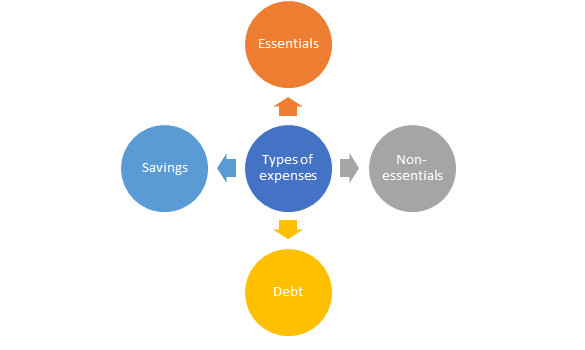
Categorising every expense makes tracking easy. You can easily decipher where each penny of yours goes. The primary goal should be to cut the non-essential expenses. It is because you cannot do much about the essentials. These are the primary costs of living that you need for basic survival.
Additionally, an emergency fund is also critical for ensuring trouble-free sustenance. It is especially helpful in unemployment, business loss, delayed salaries, client payments, etc. It helps you meet urgent costs without depending on other financial options or people.
4) Step 4- Automate the expense tracking system
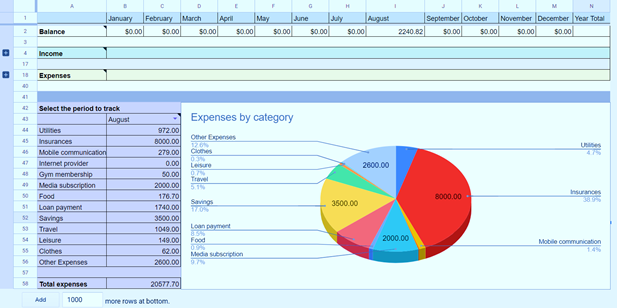
How about automating every saving effort of yours? Yes, you can do that by investing in a specific budgeting and tracking software. You can also do it for free by setting up an Excel sheet of your monthly expenses. However, you cannot automate it there.
It will help you know and track every single penny that you spend every month. It could be even the smallest thing, like replacing the bike’s tyre. Moreover, mention the aspects like- amount you lend to your roommate also. It helps you have a better picture of your savings and cut expenses that affect other important payments.
5) Step 5- Adjust the budget if required
Make financial changes according to your expense tracking system. Reduce the unnecessary costs, set limits on expenditure and prioritise essential spending. It will help you derive the amount you can save by eliminating certain costs/bills from your monthly budget.
Moreover, analyse how you can use the specific savings amount well. For example, if you wish to clear the costly payday loan debt, identify possibilities to increase savings. For that, you will need a budget that aligns with your current goals.
If you added buying a refrigerator to the next month, postpone it. Check whether you can buy it next month. It will help you make space for important payments like payday debt clearance. This flexibility on the budget helps you modify it according to changes in financial circumstances and income.
6) Step 6- Act wisely in financial uncertainty
Financial uncertainties like unemployment, sudden hospitalisation, and business loss bring in sudden expenses. You may not have a plan to tackle these. However, you can neither stay blindfolded to the need of the hour. What if you need urgent cash to get urgent medicines as your health worsens? You cannot take a chance here by postponing the deal.
Explore the financially friendly ways to tackle the need. For example, you can check instant loans to meet critical requirements. It helps you get cash the same day within 35 minutes. The process is simple with minimal documentation and no collateral requirement. It is cheaper than using credit cards for the payments.
Bottom line
These are some of the best ways to track your expenses and save money. Identify and begin by understanding your total monthly income. Next, calculate the amount you spend every month. Identify how much money you can save by cutting unnecessary expenses. Invest the money you save in critical or future life goals.